If you want to start a degree in China this year rather than next, this is one of the few doors still open: a private university in Chengdu, specialised in IT and applied sciences, is taking international applications for the Autumn 2026 intake until 15 September 2026.
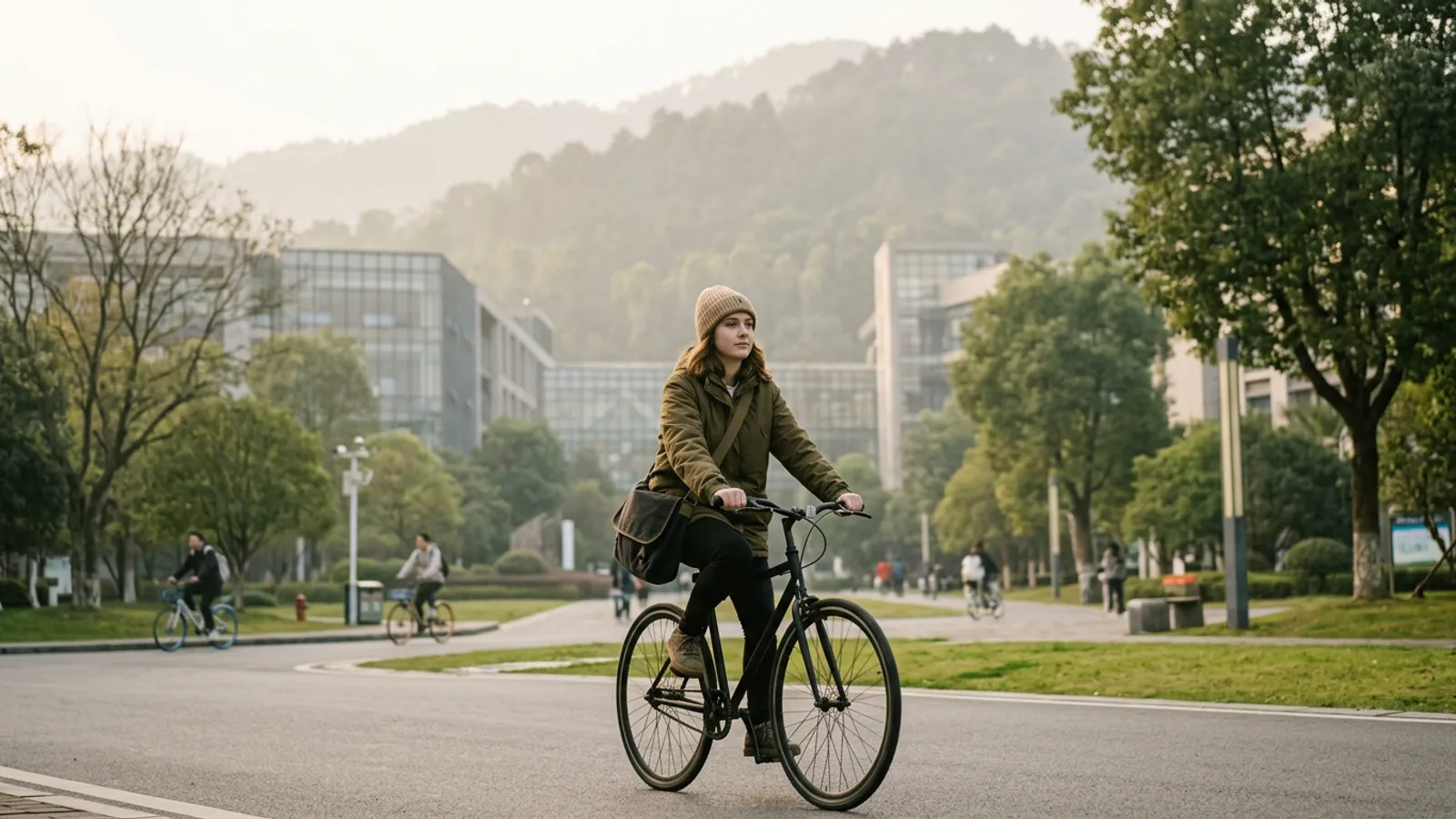
The campus sits at the foot of Qingcheng Mountain — a UNESCO World Heritage site on the green edge of one of western China's biggest cities. The teaching language is English, so there is no Chinese-language barrier between you and the classroom.
What is on offer
Three English-taught bachelor's programmes:
- Computer Science and Technology — the broad foundation: algorithms, databases, machine learning.
- Software Engineering — closer to commercial development practice: building and maintaining large systems.
- E-commerce — the intersection of IT, marketing and logistics, with obvious relevance in China.
This is a practical, employment-oriented university rather than a research heavyweight. If your goal is a ranked research institution, read our complete application guide first — that route runs on different rules and a much earlier calendar.
What it costs
| Item | List price | With scholarship |
|---|---|---|
| Tuition, per year | ¥19,080 (≈ US$2,650) | ¥12,500 (≈ US$1,750) |
| Dormitory (quad room), per year | ¥2,000 (≈ US$280) | ¥2,000 (≈ US$280) |
The scholarship is applied at admission — it is part of the offer, not a competition you enter after arriving. For context, typical tuition for English-taught bachelor's degrees in China runs ¥20,000–35,000 a year, so even the list price here is below average.
Budget roughly ¥2,000–3,000 a month for food and daily life in Chengdu; the city is noticeably cheaper than Beijing or Shanghai.
Who can apply
Applicants aged 16 to 25 with a completed secondary education. There is no entrance examination; admission is decided on your documents.
English is the one requirement with teeth, and the thresholds are moderate: TOEFL 30, IELTS 4.5, PTE 26, Duolingo 55 or EF SET 41 — or evidence that your previous schooling was in English. No certificate at all? The university runs an online interview and judges your spoken English directly. A borderline certificate is not the end of the road here.
The paperwork
The document set is standard for a Chinese bachelor's application: passport (valid for more than two years) and photo, school diploma with transcripts in colour scan, the foreigner physical examination form, a non-criminal record certificate, a bank statement, and the application form. Minors add guardian guarantee letters on university templates; applicants already in China add their visa or residence permit and prior study records.
Two of these — the medical form and the police certificate — routinely take one to two weeks, so they decide your timeline. The full checklist with preparation tips is in our documents guide.
The clock
The deadline is close. A realistic plan from today:
- This week: confirm your eligibility, reserve your place in the application queue, scan the documents you already hold.
- In parallel: order the police certificate and book the medical examination — these are the slow items.
- By 15 September: the application goes in. Documents that mature later can usually be supplied after registration, before the admission letter is issued.
Miss this window and the next comparable intake is Spring 2027, with no guarantee the same pricing survives the revision. Deadlines across Chinese universities move differently — our deadline guide explains the general calendar.
Where to start
At Stage 1 we check your documents against this programme's current requirements, confirm the scholarship terms in writing with the university, and tell you honestly whether 15 September is realistic for your file — before you pay for anything beyond that first step. If the dates don't work, you'll hear alternatives, not silence. You can also just talk to an adviser first.