
HSK — 汉语水平考试 — is the standard Chinese proficiency examination for people who did not grow up speaking Chinese. If you are applying to a Chinese-taught degree, it is the certificate the university will ask for.
The important thing to know before reading any other guide: the exam changed in 2026.
What is HSK 3.0 and when did it start?
China's Ministry of Education announced a new standard in March 2021, replacing the six-level HSK with a three-stage, nine-level structure. Chinese Testing International published the official vocabulary syllabus in November 2025, the first global pilot exams for the new levels 1–6 ran on 31 January 2026, and the new standard came into force worldwide on 1 July 2026.
The advanced tier, levels 7–9, has been running separately since its first exam in November 2022.
What this means practically: any guide describing HSK as a six-level test is describing the previous standard. Some university pages still do, because they have not been updated. That is the single biggest source of confusion right now.
| Old HSK | HSK 3.0 | |
|---|---|---|
| Levels | 6 | 9, in three stages |
| Stage grouping | — | 1–3 elementary, 4–6 intermediate, 7–9 advanced |
| In force | Until 30 June 2026 | From 1 July 2026 |
| Handwriting | Limited | Required at higher levels |
What level do universities actually require?
There is no national requirement. Each university sets its own, per programme, and publishes it on the programme page.
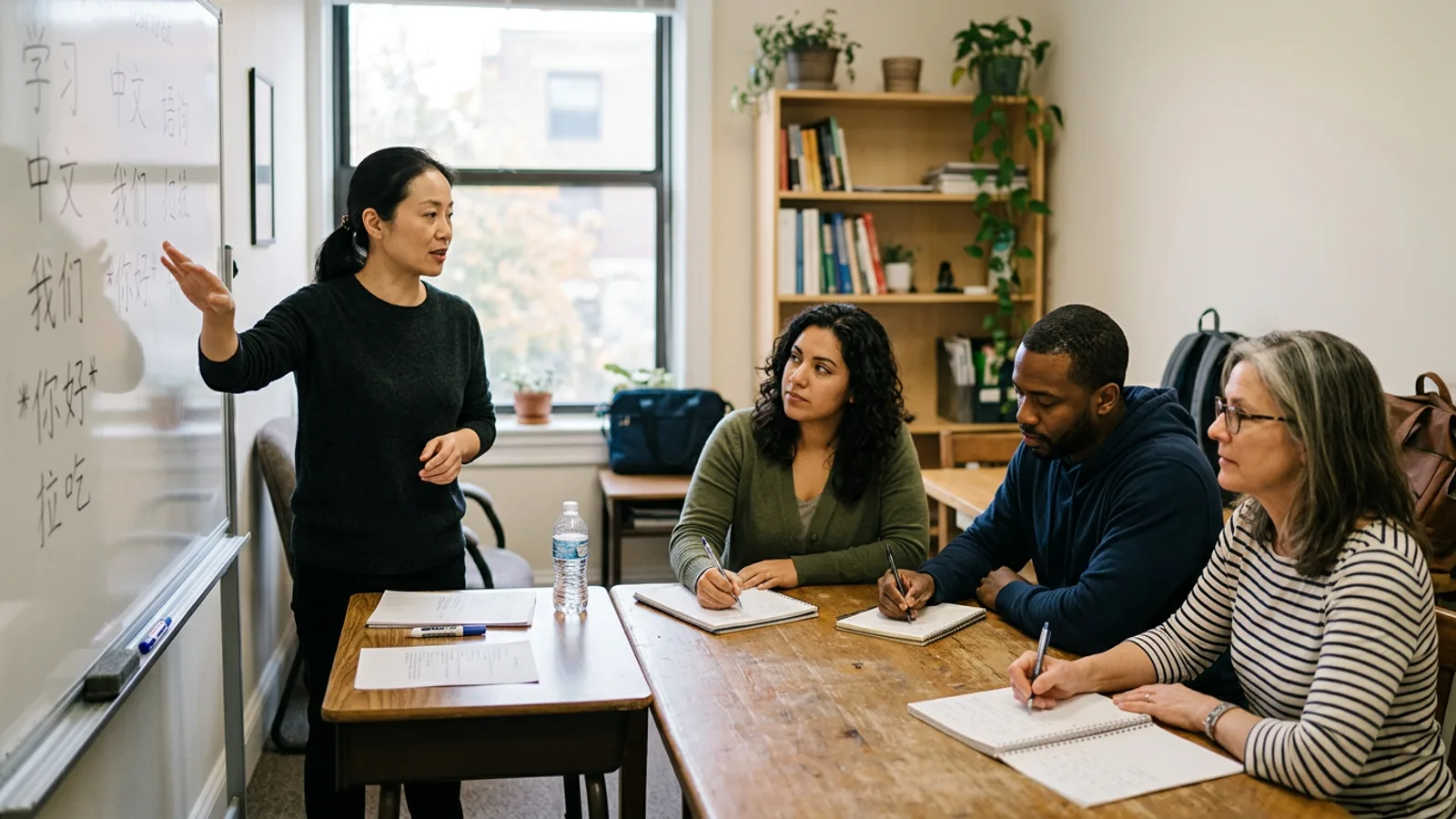
The pattern we see across files is consistent in shape even though the numbers differ: Chinese-taught bachelor's programmes cluster around an intermediate certificate, competitive programmes and those in medicine or law ask for more, and language programmes ask for nothing at all.
| Programme type | Language certificate |
|---|---|
| Language year (进修生) | None required to start |
| Bachelor's, English-taught | IELTS/TOEFL, no HSK |
| Bachelor's, Chinese-taught | Intermediate HSK, level set by the university |
| Master's, English-taught | IELTS/TOEFL, no HSK |
| Master's, Chinese-taught | Intermediate to advanced HSK |
| Medicine in Chinese | Among the highest requirements published |
We deliberately do not publish a level number against each programme type. During the transition between standards, a page saying "HSK 4" may mean the old level 4 or the new one, and those are not the same thing. Ask the admissions office which standard they mean before you book a test — it is a one-line email that can save you a year.
Which programmes need no HSK?
English-taught ones, and they are more numerous than most applicants expect. These programmes ask for IELTS or TOEFL instead, and applicants whose previous education was conducted in English can often be exempted with a letter from their school.
If your Chinese is at zero and you want to start a degree next year, an English-taught programme is the realistic route. If you want a Chinese-taught degree, the realistic route is a language year first.
Where and when do you take the test?
At authorised test centres worldwide and in an online format, administered by Chinese Testing International. Registration is through the official HSK portal.
Two practical points. Popular test centres fill several weeks ahead, so book before you need the date rather than after. And results take time to issue — build that into your application calendar, because a certificate that arrives after the university's deadline is worth nothing to that application.
How does HSK fit into the application?
It is one of the six core documents, and unlike your diploma it does not need an apostille — the certificate is issued by the test body and universities verify it directly.

The rest of the paperwork, including what does need certification, is in the document guide. When it needs to be in hand is in the deadline guide.
Is a higher level worth chasing?
Only up to a point.
Meeting the published requirement is what makes your application eligible. Exceeding it by a level is a modest positive where places are competitive, and it genuinely helps once you arrive, because lectures do not slow down for the certificate you hold.
What it does not do is compensate for school results that do not meet the programme's academic bar. Applicants sometimes spend an extra semester chasing a higher level when the actual obstacle was elsewhere in the file.
Getting an honest read on your level
At Stage 1 we check the current published requirement for each programme on your shortlist — including asking the admissions office which HSK standard the page refers to — and tell you whether your certificate qualifies you today, or what you would need. If the answer is that this intake is not realistic, you hear that before you pay anything else.
For the whole process in order, start with the complete application guide.